Leadership Isn’t a Pension. Chris Van Hollen for Majority Leader.
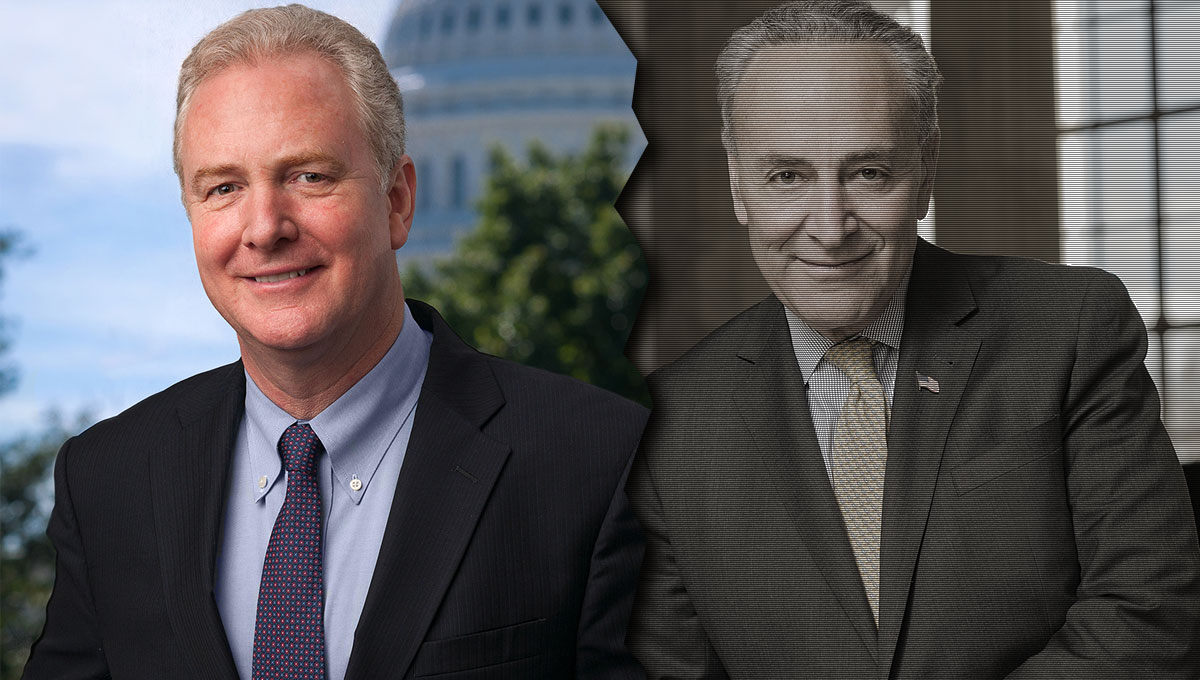
Same Neighborhood, Same School, Different Verdict
Here’s a detail I love. On Jon Stewart’s podcast last week, Bernie Sanders pointed out that he and Chuck Schumer grew up in the same neighborhood and went to the same elementary school. Then he said Democrats need new leadership, and that if Chris Van Hollen chose to run, he would support him. A day later, Van Hollen announced his challenge, and Sanders endorsed him that night.
Quick housekeeping. In my first post I named Chris Murphy as my Senate pick. Murphy is in rehab for several weeks after a stroke, and Van Hollen is now an actual candidate with actual endorsements. So consider this the update: I’m all in on Van Hollen.
My rule is simple. Leadership goes to the person best positioned to lead, not the person who’s been there the longest.
Seniority is a pension.
Leadership is a job.
Senate Democrats pick their leader by secret ballot, currently scheduled for the first week of December. Whoever wins needs 28 or 29 votes. Schumer has run this caucus since 2017.
So let’s talk about whether he should KEEP running it.
“You Don’t Fire the Manager Who Just Won the World Series”
That’s the pitch from Schumer’s defenders. Angus King asked it, Ruben Gallego compared Schumer to a manager who took the team to the World Series, and Tammy Baldwin ran a Brewers version of it (Zeteo has the roundup). It’s cute.
It’s also wrong.
Van Hollen’s answer on ABC was that he respects the Democratic Senatorial Campaign Committee’s (DSCC) work (he used to chair both the DSCC and the Democratic Congressional Campaign Committee, the DCCC), but this wasn’t a Washington-orchestrated election. It was voters rising up against a lawless president. He pointed to Scott Colom in Mississippi, who wasn’t recruited or picked by anyone in Washington, and Annie Andrews in South Carolina. Republicans in Washington raised twice as much money. As he put it, it was voter power.
Credit where it’s due: Schumer helped recruit Roy Cooper and Sherrod Brown, and both won. But elections ain’t baseball.
Nobody was on the field because of the manager.
They were there because voters were furious.
And look at what the manager did with his lineup. In Michigan he backed Haley Stevens against Abdul El-Sayed. Stevens lost the primary and then, in the final days of the general, endorsed the fucking Republican. Schumer called that a “despicable betrayal”….but HE picked his betrayer, and said she was superior to El-Sayed.
Van Hollen’s point is that El-Sayed and Peggy Flanagan are headed to the Senate even though neither got support from Schumer or the DSCC. In Maine, Schumer’s recruit Janet Mills dropped out, and the eventual nominee, Troy Jackson, has said he doesn’t think Schumer can rebuild the party’s standing with working-class voters.
Then there’s Florida. Angie Nixon, a state representative from Jacksonville, upset the DSCC’s favorite, Alex Vindman, in the primary, and then lost to Ashley Moody by 2.9 points, 50.8% to 47.9%. TWO POINT NINE POINTS. That’s a margin of about 148,000 votes. Polling averages had Moody winning by about six, and Democrats lost that state by 13 points in 2024 and 16 in 2022.
A good manager notices a race like that.
Here’s what the reporting shows: Nixon says she asked Schumer for help and got a noncommittal answer. The DSCC set up a joint fundraising committee with her but, per The American Prospect, did NOT donate to her campaign, and one report says Senate Majority PAC spent nothing on her either. Schumer himself got involved after she called him out publicly: his PAC gave her money, and he hosted a virtual fundraiser around October 20, two weeks before Election Day. The DSCC is chaired by Kirsten Gillibrand, whom Schumer picked.
A quick note on the donation. Federal law caps a PAC’s direct contribution to a candidate at $5,000 per election, so the size of that check tells you very little. The real question is the unlimited money, through the DSCC and Senate Majority PAC, that never showed up.
Was Florida a long shot? Sure.
Forecasters rated it Safe or Solid Republican, and as of October 1 a Ken Griffin-backed super PAC accounted for about 87% of the spending in the race, all of it attacking her.
Could more help have flipped it? Nobody knows.
But the gap was about 74,000 votes that needed to change their minds, and a manager who barely looks at a race like that until the last few weeks isn’t reading the field.
That’s not a World Series manager. That’s a guy whose team won in spite of some of his lineup decisions.
The Fight Record
“Fight” is the word every Democrat has been using since 2024, so let’s look at who actually did some.
March 2025. Schumer led ten members of his caucus in voting to break a filibuster on a Republican stopgap spending bill, which let it pass. Van Hollen voted against it.
The fall 2025 shutdown. Both men voted no on the final deal, to be fair to Schumer, that’s true. But eight members of his caucus broke ranks anyway, and more than 50 progressive groups called on him to step down. Van Hollen, for his part, said he’d voted seven times for a responsible deal before voting no on this one. A leader’s job is holding the caucus together on the one issue that matters, and that’s the job Schumer couldn’t or wouldn’t do.
El Salvador. In April 2025, Van Hollen flew to El Salvador to demand the release of Kilmar Abrego Garcia, a Maryland man wrongly deported. He was turned away at the CECOT prison, met Abrego Garcia anyway, and got called “disgusting” by the White House border czar for his trouble. That’s a senator who shows up where the fight is.
Gaza. Van Hollen co-led Bernie Sanders’ resolutions to block offensive arms sales to Israel, along with Jeff Merkley and Peter Welch, and voted yes on all three in November 2024. Schumer strongly opposed them. In July 2025, a majority of Senate Democrats voted for at least one of Sanders’ resolutions, and Schumer voted against the rifles resolution. By this spring, only seven Democrats voted no on both resolutions, and Schumer was one of the seven.
When most of your caucus has moved and you haven’t, you’re not leading it.
You’re being dragged.
Policy: Who Actually Wants to Pass Something
Medicare for All. Van Hollen became a cosponsor of Sanders’ Medicare for All Act in December 2025, and he’s since said that we need a Medicare-for-All-type solution. Schumer’s allies, according to Zeteo’s summary of The Hill’s reporting, think progressives are using Van Hollen as a stalking horse to push Medicare for All and the end of the filibuster.
So the case against Van Hollen is that he might push for things a huge chunk of Democratic voters have been asking for? Okay then.
The plan. Van Hollen’s line has been consistent: no coronation, and “we need commitments” before anyone is handed the job. He’s also said it’s not a time for incrementalism, and that the party needs a bold kitchen-table agenda. Even Elissa Slotkin, who disagrees with Sanders on plenty, said the same thing: she’s a no until someone shows her a concrete plan for the first 100 days. Asked by the AP whether he’d try to eliminate the filibuster, Schumer wouldn’t say. “The focus has got to be on getting things done” is not a plan. It’s a bumper sticker.
Lane check. Zeteo’s shorthand is “the centrist New Yorker” versus “the Maryland progressive,” and I don’t have a better one. But Van Hollen is no outsider. He chaired both the DCCC and the DSCC, which means he knows exactly how to raise money and win campaigns. He’s the progressive in this race who has also done the establishment job.
Money and Backing
Schumer’s money. According to one Wall Street watchdog, three of his five biggest career donors are Goldman Sachs, Citigroup and JPMorgan Chase. Sludge reported that a $66,000 bundle of checks from the health insurance industry’s top lobbyist arrived while that industry was lobbying against Medicare coverage in Build Back Better. I’m not saying a check changed a vote. I’m saying that’s who he’s comfortable with. I’m saying that’s who has his ear.
The primaries. Van Hollen says Schumer joined forces with AIPAC and crypto to try to beat El-Sayed and Flanagan. In Michigan, the record backs him up: Schumer backed Stevens, and AIPAC spent nearly $30 million in that race, its largest investment in a single race. In Minnesota it’s murkier. Sludge reported last year that Schumer’s reported favorites in both states lined up with AIPAC’s endorsements and the crypto industry’s backing, and crypto-linked outside groups did pour money into Angie Craig’s race. But AIPAC itself didn’t endorse Craig or directly spend for her. You can decide how much of that is coincidence.
Van Hollen’s money. I’m not going to pretend he’s a monk. FEC filings show that the PAC money he does take leans corporate and trade, and large individual donors have long been a big part of his campaigns. He’s an establishment fundraiser who has chosen to fight the establishment, and that’s not nothing.
Who backs whom. Van Hollen has Sanders, El-Sayed and Flanagan on the record. As of Friday, Axios counted 14 public Schumer supporters (himself included) against five for Van Hollen, and Van Hollen says he has “more than 10.” Schumer’s allies told The Hill they expect more than 40 votes. Whoever wins needs 28 or 29. Slotkin opposes Schumer but hasn’t endorsed Van Hollen. And remember, it’s a secret ballot, so every one of these numbers is softer than it looks.
Seniority Isn’t Leadership
Here’s what bugs me most. Days before Van Hollen jumped in, Schumer was asked on The New York Times’ “The Daily” whether he expected a challenge. His answer, in one word, was no. That’s the sound of someone who thinks the job is his.
Van Hollen’s answer is that there should be no coronation. He says Schumer’s team has been putting out misinformation to scare senators who might back a new leader, and he asked, on ABC, “How about a little democracy in the Senate Democratic caucus?” Sanders has gone further and called for a public, televised leadership debate on health care, taxing billionaires, AI and war.
That’s the difference. Schumer’s pitch is that he’s done this for nearly a decade. Van Hollen’s pitch is what he’d do with this majority. One is a résumé. The other is a plan.
A caucus that just won 54 seats or more shouldn’t be asking “who’s earned it?” It should be asking “who do we trust to lead us for the next two years?” Those are different questions, and only one of them is about the voters who just handed us the majority.
The Part Where I Argue Against Myself
I’d rather say these out loud than have you find them in the comments.
Schumer may well have the votes. He has more public support than Van Hollen so far, and Sherrod Brown, who beat Jon Husted to return to the Senate, said he’s supporting Schumer. His allies say he’ll get more than 40. A secret ballot cuts both ways: Schumer’s list may be soft, but so is Van Hollen’s “more than 10,” and neither has been proven.
Van Hollen has been inconsistent. In June he told the AP he had “not thought about” leading Senate Democrats. He’s also been openly kicking the tires on a 2028 presidential run, and The Hill described his path to this race as a flip-flop. A leader who’s eyeing another job is a fair worry.
Slotkin’s test is fair. She wants a leader who governs for blue, purple and red states alike. Van Hollen comes from deep-blue Maryland, and he’ll have to prove he can lead a caucus that now includes new senators from Kansas, Iowa, Texas and Ohio.
Health, again. I took Murphy out partly over his recovery, so the same rule has to apply here. Van Hollen had a minor stroke in 2022, and according to the AP he has since recovered. Murphy is still in rehab. Those are two different situations.
None of this changes my answer. It changes the stakes. This is winnable, but only if senators hear from the voters who just gave them the majority, before the first week of December.
What You Can Do (This One’s a Senate Thing)
Ground rules first. Only Senate Democrats vote on this, by secret ballot, and that includes the senators-elect, who vote in party elections even though they haven’t been sworn in. It’s currently scheduled for the first week of December. So the people to call are your Democratic senators.
- If you have a Democratic senator, call their office this week.
- Say: “I voted Democratic because I wanted change. Will you support Chris Van Hollen for majority leader, and if not, what’s your plan for the first 100 days?”
- Ask for a yes or no. “I’m still listening” isn’t an answer, not with a vote this close.
- Send this to one friend who lives in a state with a Democratic senator.
If both of your senators are Republicans, they don’t get a say in who leads the Democrats. But you can pass this along to someone whose senators do.
We spent two years asking Democrats to fight. Now they get to pick who leads the fight. Let’s make them pick like it matters.
Sources
- Zeteo: Chris Van Hollen can take down Schumer
- The Hill: Sanders will support Van Hollen if he runs
- CBS News: Van Hollen announces he will challenge Schumer
- ABC News: Schumer and Van Hollen are facing off
- Axios: The senators who could join Van Hollen’s insurgency
- Time: Van Hollen challenges Schumer
- AP via KSHB: Van Hollen considers a challenge
- AP via Boston.com: Sanders won’t support Schumer
- Singju Post: Sanders and Slotkin press conference transcript
- Michigan Advance: Schumer confident he’ll lead Senate Democrats
- Fox News: Schumer’s grip on power slips
- Newsweek: Full list of Democrats rallying against Schumer
- The Hill: Schumer expects reelection as leader
- Michigan Public: El-Sayed vs. Rogers
- NBC via News From the States: Democrats win the Senate
- CT Mirror: Murphy discharged from hospital
- AP via WDBO: Murphy stroke
- NBC News: Schumer and Jeffries defuse tensions (March 2025)
- Van Hollen: statement on vote against the Republican CR
- Van Hollen: statement on intent to vote no on funding bill
- NPR: A Maryland senator visits his wrongfully deported constituent
- Jewish Insider: Nineteen Senate Democrats vote to block aid to Israel
- JNS: Two Sanders bids to ban arms sales to Israel fail
- NOTUS: More Senate Democrats are breaking with Israel
- Portside: Van Hollen cosponsors Medicare for All
- Common Dreams: Van Hollen on a Medicare-for-All-type solution
- Common Dreams: Chris Van Hollen and Chuck Schumer
- AP via WABE: House Democrats’ agenda and the filibuster
- Wall Street on Parade: Schumer’s donors
- Sludge: Schumer coverage
- Sludge: Schumer lines up behind centrists in Senate primaries
- JNS: Flanagan wins the Minnesota primary
- FEC: Van Hollen candidate profile
- Legilist: Van Hollen fundraising, 2020 cycle
- AP via AJC: Van Hollen backs El-Sayed
- Fox 5 DC: Van Hollen eyes a 2028 bid
- The Hill via Yahoo: Sanders will support Van Hollen if he runs
- WUSF: Moody wins Florida Senate race
- WUSF: Nixon upsets Vindman in the primary
- Wikipedia: 2026 Florida Senate special election
- Atlanta Black Star: Nixon on Schumer and national Democrats
- Baller Alert: Nixon nearly beat Moody without DSCC money
- Ballotpedia: DSCC
- Reuters via WHBL: Griffin-backed super PAC in the Florida race
- Axios: Sanders, Florida Democrats and a $250K donation