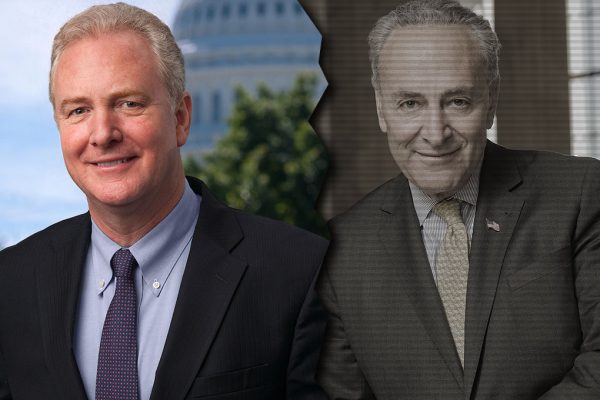
Congratulations. Now Don’t Hand the Keys Back.
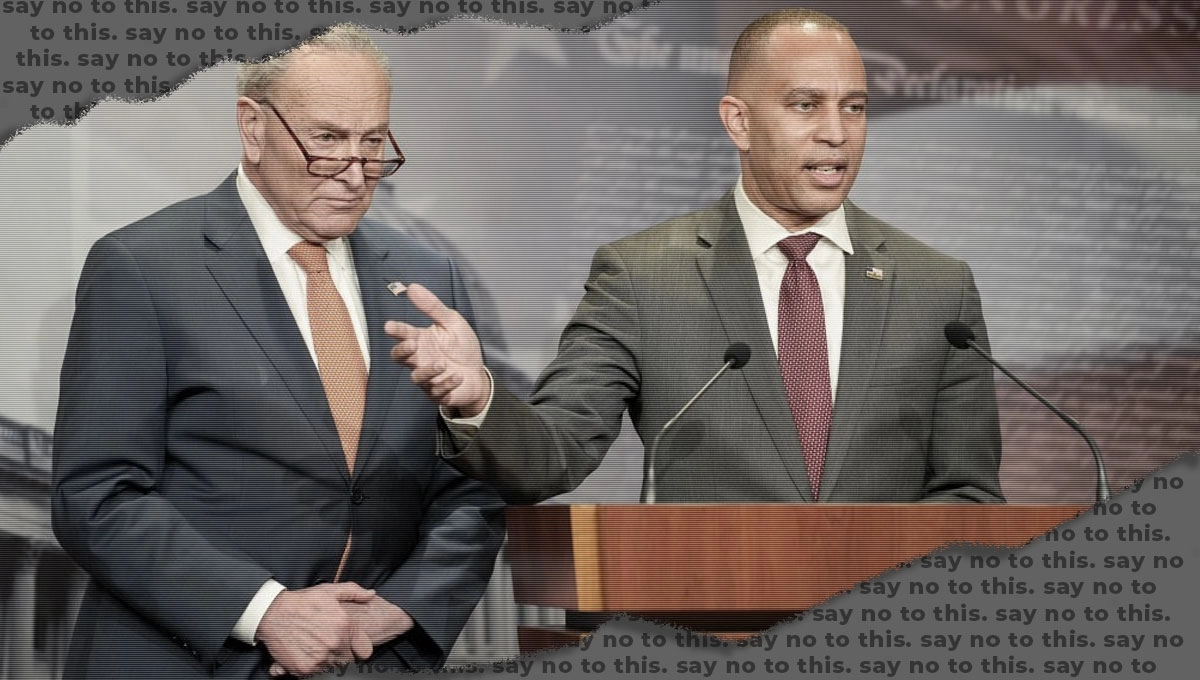
We Won. Now For the Part Nobody Wants to Hear.
A dear friend asked me this week why I’m not on board with Hakeem Jeffries as Speaker and Chuck Schumer as Majority Leader. Not in a hostile way. More of a “Dude, we just won, why are you picking a fight?” way.
Fair question. So here’s the long answer, for the people who asked and the people who were too polite to.
First, the good news, because we earned it. Democrats took the House and flipped the Senate, with seven Republican seats going blue in Kansas, Iowa, Texas, Ohio, Maine, North Carolina and South Carolina. Cost of living helped carry the House after four years of a razor-thin Republican majority that handed a big chunk of its power to the Trump administration.
Celebrate this.
I do.
Here’s the thing though…a win like this is a mandate, and a mandate is a use-it-or-lose-it deal. The question isn’t whether we won. The question is who we hand the steering wheel to now.
And I don’t think the answer is the same two guys who were driving for the last two years.
Change Means CHANGE
Every message this cycle was some version of “things are broken and we’re going to fix them“. If that’s what we told voters, then handing the gavel to the same leadership is the opposite of the message. You can’t run on change and then hand the keys back to the people who wrote the old playbook.
And this isn’t some fringe thing. It’s Democrats telling us what they want:
- A CNN poll cited in coverage of the Jeffries backlash found 64% of Democratic voters want radical change in the party, starting with leadership.
- At least 13 states had Democratic Senate candidates who opposed Schumer staying on as leader. Juliana Stratton in Illinois said no before she even won her primary.
- Last fall, 20 House candidates told Axios they wouldn’t vote for Jeffries as Speaker or leader, with five more saying they were likely no.
To be fair, a lot of those folks were candidates, not members with a vote. That changed on Tuesday. The ones who won now have an actual vote.
Chuck Schumer: Big on Threats, Light on Follow-Through
Let’s start with the Senate, because Schumer’s record is the longer one.
March 2025. After signaling a fight, Schumer backed a Republican funding bill to avoid a shutdown. House Democrats started calling for him to step down. His defense was that he should be the leader because he recruits strong Senate candidates.
Fall 2025. Eight members of his caucus voted to reopen the government without extending the health care tax credits Schumer himself had been calling that a life or death issue. To be fair, he voted no…but calling it life or death, then not being able to get your own caucus to hold the line? Weak. Holding the caucus together is the WHOLE job, and he couldn’t do it on the one issue Democrats actually said they’d draw a line on. MoveOn, Indivisible and Our Revolution all demanded he step aside, and Indivisible said it wouldn’t back any Senate primary candidate who wouldn’t say the same.
Michigan, August 2026. Schumer backed Haley Stevens in the Democratic primary. AIPAC spent nearly $30 million in that race, its largest ever for a single race, and Abdul El-Sayed still won the nomination. Credit where it’s due: Schumer and Gillibrand put out a statement backing El-Sayed the next day. But Stevens later endorsed the Republican in the final days. I’m not blaming Chuck for what Stevens did. I’m saying that’s who he bet on, and the voters said no.
Mamdani. Schumer moved fast on El-Sayed when a Senate seat was on the line. His response to Zohran Mamdani’s primary win was far more cautious. As of early October 2025, neither Schumer nor Jeffries had announced support, more than three months after the primary. That’s what “support following self-interest instead of the voters” looks like from the outside.
The older record. He voted for the 2002 Iraq war authorization. He came out against the Iran nuclear deal in 2015, over objections from the White House and liberal groups.
The money. I can’t prove a donation changed a vote, and nobody else can either. But three of his five biggest career donors have been Goldman Sachs, Citigroup and JPMorgan Chase, according to one Wall Street watchdog, and a $66,000 bundle of checks from the health insurance industry’s top lobbyist arrived while that industry was fighting Medicare coverage in Build Back Better.
When the guy who keeps threatening a fight keeps backing down, asking who’s paying for his acquiescence is a fair question.
Meet Joe and Eileen Bailey (They Don’t Exist)
Okay, this one is my favorite, so I need you to stay with me here…I promise it matters.
Chuck Schumer has an imaginary couple he consults when making decisions. He has created avatars for who he sees as the average American he wants to please. The everyday people he wants to fight for. Their names are “Joe and Eileen Bailey”. They first showed up in his 2007 book, Positively American, where John Oliver counted 265 mentions in 264 pages.
He has built them an entire life. Joe sells insurance. Eileen works in a doctor’s office. They live in Massapequa on Long Island, and they used to be the O’Reillys until Schumer wanted them to sound more national for the book. Joe sings along to the national anthem before Islanders games. Eileen volunteers at her church. Schumer has said, with a straight face, that he has “conversations” with them.
He describes them as Reagan-era Republicans, socially liberal but fiscally conservative. Which, fine. Every politician keeps a composite voter in their head.
Here’s where it gets me, though.
By Schumer’s own account, the Baileys voted for Trump in 2016, split in 2020, and voted for Trump again in 2024.
So the person he asks “what would the average voter think?” keeps voting Republican, and he keeps asking anyway.
I’m not saying the Baileys sound like MAGA. They don’t, on paper.
I’m saying his avatars are folks willing to choose MAGA over what Schumer supposedly believes in.
I’m saying the compass points at a voter who already left, while the people who actually showed up for Democrats this week aren’t in Massapequa’s imagination.
I’m saying he cares what those imaginary people and people like them think…over what you or I might think.
John Oliver put it better than I can: Schumer’s devotion to the Baileys may explain why the party feels so underwhelming, because he’s focused on them while forgetting other voters exist. While forgetting where HIS voters actually stand.
He’s out of touch with what current voters feel and believe.
A leader who lives in 1980 can’t lead us in 2027.
Hakeem Jeffries: Protecting the Old Guard while waiting to see who wins
Before I get into it, let me deal with something up front. If Jeffries becomes Speaker, he’d be the first Black Speaker in American history, and as a Black man, that matters to me. His defenders argue that he’s held to a different standard than other leaders. I take that seriously. But history-making and ready to fight are two different questions, so I’m sticking to what he’s actually done.
Mamdani. When asked whether he backed the Democratic nominee for mayor of his own city, Jeffries repeatedly declined to say, as of early October 2025, months after the primary.
Gaza. He rejected calls for a ceasefire during the war, and protesters showed up at his office over it.
The donor network. According to OpenSecrets data cited by Common Dreams, Pro-Israel America was his single largest donor in one recent election, and three of his top five contributors were pro-Israel groups. Asked about AIPAC on WNYC, Jeffries said its PAC can only give $5,000 or $10,000 per cycle. Reporting from Sludge says that understates it, because AIPAC’s PAC has raised more than a million dollars in earmarked donations for him. AIPAC’s position is that its money comes from American citizens, and that’s a fair, albeit impossible to confirm, point.
I’m not claiming a check changed his vote. My point is about deterrence. When a member crosses the AIPAC network, the network spends big. Regardless of party. Regardless of position. AIPAC is about AIPAC….not about the people. We just watched it spend nearly $30 million in Michigan. Every House member knows this, and I’d want a Speaker who isn’t playing the odds on it. I’d want a speaker willing to stand for what is right, not for who has the most money or who might get angry and spend that money.
The Kushner meeting. He took heat from progressives over sitting down with Jared Kushner. Jared Kushner…. Donald Trump’s son-in-law who hasn’t been elected to any official governmental office. Jared Kushner who has literally nothing to do with Hakeem Jeffries actual job.
Protecting incumbents. He has a policy of backing his incumbents against primary challengers. That’s a fine policy if you’re the incumbent. It’s a bad policy if voters feel differently.
His own caucus. Then-outgoing Progressive Caucus chair Pramila Jayapal told Axios in 2024 that Jeffries would hear from the caucus that it has to be willing to take on progressive policy fights. Two years later, that’s still the argument.
“But They Won!” And Other Fair Points
I’d rather answer the pushback than pretend it doesn’t exist.
“Schumer recruited the class that just flipped the Senate.” He says so himself, and a former aide argues that leaders don’t get replaced because they won. That’s real credit, and I won’t pretend otherwise. But credit isn’t a lifetime appointment. The question isn’t who gets a thank-you card. It’s who leads the next two years of using this majority. The Democrats need to stop choosing leaders based on who has seniority, and start choosing based on ability to lead.
“Jeffries held a thin caucus together and delivered the House.” Also true. He also endorsed Summer Lee and Ilhan Omar, even while Lee was facing millions in AIPAC spending. Give him that too. My answer is the same: delivering a majority is one skill, and using it against resistance is another.
“Even AOC doesn’t want a fight with Jeffries.” She said she doesn’t think a primary challenge to the leader is a good idea right now. That was about primaries, not about who holds the gavel in January. Different question.
“Okay, then who?”
For the House, I’d point to Ayanna Pressley.
She has represented Boston since 2019, and she got to Congress by beating an incumbent Democrat on a “change can’t wait” campaign. She sits on the Oversight Committee, where she has been a prominent voice for Epstein survivors and which Democrats will use to investigate the administration now that we have the gavel. When she passed on a Senate run last December, she said she wanted to use her growing seniority and her stature as a national progressive figure to help Democrats win the House majority. We won it.
In fairness, she backed Nancy Pelosi for Speaker in 2018, right after running on change, and as far as I can tell she hasn’t said she wants this job. Neither of those answers the question. The point is that the House has people ready to lead, and the choice shouldn’t be Jeffries by default.
For the Senate, I’d point to Chris Murphy.
He’s been one of the loudest voices in the caucus for a sharper economic message and a more aggressive response to the president’s policies, he’s 53 to Schumer’s 75, and he spent the final stretch of this campaign crossing the country for Democratic candidates.
Now the catch, and I’d rather say it than have you find it. Murphy had a stroke on Halloween weekend and was treated at Johns Hopkins. His office says doctors are encouraged and expect a full recovery. The Senate Democrats’ leadership vote is in December, and nobody can say yet what recovery looks like or what the job demands. I’m not going to speculate about a man’s health. For what it’s worth, Luján, Van Hollen and Fetterman all had strokes in 2022 and are still serving. But the caucus will have to weigh it, and so should you.
Two more things: as far as I can tell, Murphy hasn’t said he wants the job, and when asked about Schumer he said only that Schumer has a very tough job. If he doesn’t run, my answer is still the same. The Senate needs a leader who wants to fight.
Whoever it is, the choice will be made by the members themselves. Which brings us to what you can do about it.
What You Can Do (Yes, You)
Here’s where I stop complaining and hand you something to do.
We don’t pick these leaders. The members do. The Senate Democratic caucus chooses its own leader, and the House votes on a Speaker when the new Congress convenes, which Axios has pegged as Jan. 3. Which means the people who matter most right now are the senators and representatives who just won, and the ones who are still deciding. Those calls usually happen soon after the election, so this is a this-week thing.
- If your senator or representative is a Democrat, call their office.
- Say: “I voted Democratic on Tuesday because I wanted change. Who are you planning to vote for as [Senate leader / Speaker], and will you commit to supporting new leadership?”
- Ask for a name. “I’m listening to my colleagues” is not an answer.
- Send this to one friend who lives in a Democratic district.
- Repeat as often as necessary
You can also call the Democratic Caucus Hotline at 202-225-1400, and let them know how you feel. Granted, thats a clearing house for the entire party….but if they hear from enough of us….
If your representative is a Republican, they don’t get a say in who leads the Democrats. But you can still pass this along to someone whose representative does.
We spent two years asking Democrats to fight. They finally got the chance. Let’s make sure the people holding the gavel are the ones who actually want to.
Sources
- Northeastern Global News: 2026 midterm results
- CBS News: House results
- Axios: Schumer faces growing House Dem calls to step down (Mar. 2025)
- Axios: Schumer faces mounting calls to resign as leader (Nov. 2025)
- Axios: Dozens of Dem candidates won’t commit to backing Jeffries
- Axios: Jeffries and House primaries
- Axios: Inside Hakeem Jeffries’ coming fight with his left flank
- The Hill: Questions about Schumer’s future
- Washington Times: Democratic push to replace Schumer
- Michigan Public: El-Sayed vs. Rogers
- WDIO: El-Sayed wins Michigan primary
- Common Dreams: Democratic leaders back El-Sayed
- La Voce di New York: Leaders rally behind El-Sayed after snubbing Mamdani
- BizPac Review: Jeffries and Mamdani
- theGrio: Jeffries and the Kushner backlash
- Sludge: Jeffries misleads on AIPAC PAC money
- Common Dreams: Pro-Israel lobby
- AIPAC: The truth behind “AIPAC money”
- The Root: Jeffries stands by Summer Lee
- Newsweek: AOC on a Jeffries primary challenge
- Wall Street on Parade: Schumer’s donors
- Sludge: Schumer coverage
- Accuracy.org: Schumer and the Iran deal
- Daily Beast: Schumer’s imaginary couple
- TheWrap: John Oliver on the Baileys
- The Nation: The Baileys
- inkl: Schumer, the Baileys and the shutdown vote